
| 2010-03-12 | Les Underhill | | The world is gathering at Barberspan Bird Sanctuary | 
Here is ADU PhD student Yahkat Barshep, from Nigeria, holding an Egyptian Goose in South Africa.
60 people are currently assembling at Barberspan Bird Sanctuary in North West Province for the 2010 SAFRING Ringers' Conference. Delegates represent Botswana, France, Kenya, Nigeria, Poland, USA and, of course, the host nation South Africa, with at least one person from every province.
Even though the official start of the conference is not until this evening, most people had already arrived yesterday, and had set up their nets and traps. Ringing started in earnest yesterday evening, with a big catch of waders, ducks, geese and coots, and has continued today, with mistnets set up at various sites scattered over a large area. Species ringed today included Great Reed Warbler, Helmeted Guineafowl, Red-knobbed Coot, Rattling Cisticola, Ant-eating Chat, Kittlitz's Plover, Little Stint and lots of Red-billed Queleas and Southern Red Bishops.
This is the biggest gathering of people at Barberspan Bird Sanctuary for many years. This site was once one of the world's most renowned centres of excellence in waterbird research. Sadly, about 20 years ago it fell into disuse. Currently, the North West Parks and Tourism Board, aided by the ADU, is working hard to restore Barberspan to its former glory. The 2010 SAFRING Ringers' Conference is part of the rebuilding process.
We will report daily on highlights from the conference   | | | | | 2010-03-08 | Les Underhill | | Last week before the Barberspan Ringers' Conference | 
Magda Remisiewicz and Joel Avni have been at Barberspan Nature Reserve for a week already doing fieldwork and getting everything ready for the SAFRING Ringers' Conference this coming weekend. They have with them Sara Lipshutz, currently a semester abroad student at UCT, coming from Swarthmore College in Pennsylvania.
They asked Sara to describe her experiences: "Things here at Barberspan are going great. So far, we’ve ringed 136 individuals of 18 different species. Fortunately for Magda and me, the most common species are our targets – Little Stint and Kittlitz’s Plover. We got some really amazing catches – a juvenile Greater Flamingo [see the picture], a Cattle Egret, and a White-breasted Cormorant. Magda and Joel are busy working with the field rangers to prepare for the conference, and I’m getting to know a LOT more about birds – different species, their habitats, behaviors, calls, etc. I’ve seen 99 different species so far, and can’t wait to keep on birding!"
There is now only camping available for the Ringers' Conference. See the SAFRING website.   | | | | | 2010-03-08 | Les Underhill | | ADU staff and students doing presentations next week! | 
On the days between the Ringers' Conference in Barberspan and the BLSA AGM in Wakkerstroom, ADU staff and students will be doing several presentations:
- Tuesday, 16 March – BirdLife Vaaldam, Deneysville Aquatic Club, Deneysville: Dieter Oschadleus – "Unmasking the South Masked Weaver"
- Tuesday, 16 March – BirdLife Inkwazi Bird Club, Bryanston Country Club, 19h30: Les Underhill – "You can make a difference – being a citizen scientist with SABAP2"
- Wednesday, 17 March – Newcastle Bird Club, Newcastle Club, corner of Scott and Bird Streets, Newcastle: 18h20 for 18h30: Dieter Oschadleus – "Africa's feathered locust: the Red-billed Quelea"
- Thursday, 18 March – Wits Bird Club, Delta Park Environmental Centre, 19h30: Yahkat Barshep – "Birding and bird studies in Nigeria" and Magda Remisiewicz – "Wader migrations link Europe and Africa"
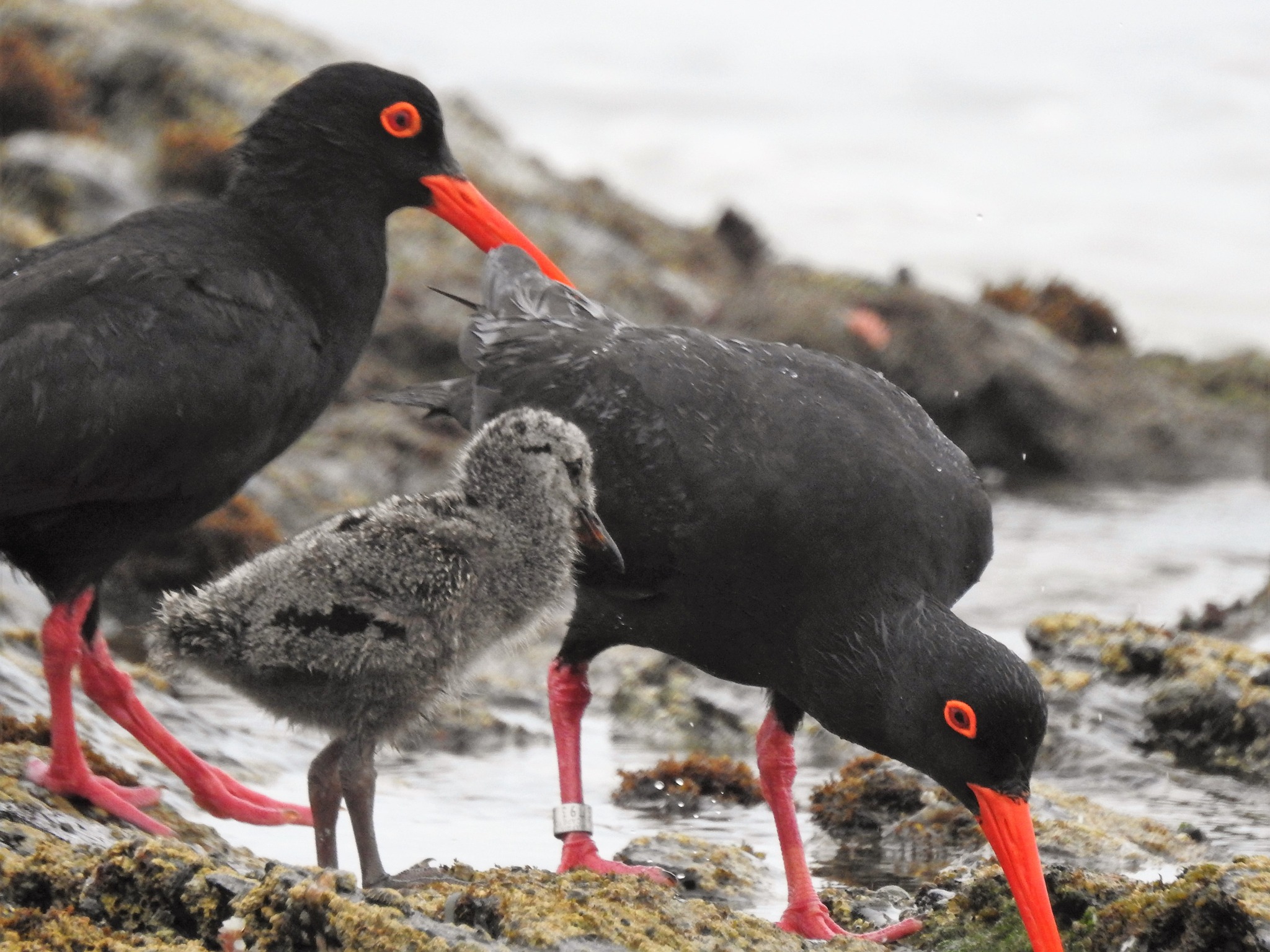
ADU representatives at the BLSA AGM will be Dieter Oschadleus (who will be doing ringing demonstrations), Doug Harebottle (who will talking about atlasing), Les Underhill (who will also be talking about atlasing) and Yahkat Barshep (PhD student in the ADU, who is from Nigeria, and who did her MSc on the Rock Firefinch, a species first described in 1998, the species in the photo above).   | | | | | 2010-03-01 | Dieter Oschadleus | | Oystercatcher ring sizes | African Black Oystercatcher males take 8 mm rings, and females 10 mm rings (9 mm if available). Chicks should be ringed with the larger ring size since they cannot be sexed - they can only be ringed when the tarsi are large enough for a 10 mm ring. Read more in this Afring News article.   | | | | | 2010-02-17 | Les Underhill | | Foreigners at the Barn Swallow roost at Durbanville | To date, several thousand Barn Swallows have been ringed at a roost near Durbanville, Western Cape, in the past few months. Four of the birds have had foreign rings. Two had been ringed as nestlings in England; one in Wiltshire in July 2006, and one in Sussex in August 2008. Two had been ringed as juveniles (so we don't know exactly where they were hatched), one in North Yorkshire, England, in August last year, and one in Araba, Spain, in September last year.
The nestling ringed in 2006 would have made seven migration trips, four southward and three northward. Each trip would be around 10 000 km, so this 20 g bird would have covered about 70 000 km on migration flights alone.
If you come across a bird, alive or dead, marked in any way please report it to SAFRING. Marks include numbered steel rings, plastic colour rings (which may be inscribed), petagial tags, or dyes. The SAFRING website is at http://safring.adu.org.za, and you click on "I found a ring" or "I saw a ringed bird" on the left hand side menu. Fill in the form and submit it.   | | | | | 2010-02-15 | Les Underhill | | Secretarybirds with petagial tags | There is an interesting report on fitting petagial tags to Secretarybird chicks on ringer Arnold van der Westhuizen's birding blog. Arnold, and Dawie de Swardt who is the ornithologist at the National Museum in Bloemfontein, have tagged nine Secretarybird chicks in the Free State so far this breeding season. This is part of a project of the Birds of Prey Working Group of the Endangered Wildlife Trust to determine the dispersal patterns for this species.
All resightings of these or any other bird marked in some way can be reported to SAFRING. Likewise, if you find a dead bird with a ring. The SAFRING website is at http://safring.adu.org.za, and you click on "I found a ring" or "I saw a ringed bird" on the left hand side menu.   | | | | | 2010-02-09 | Les Underhill | | What is on the go at Barberspan? |
What can you expect to encounter at Barberspan Bird Sanctuary during the Ringers' Conference from 12–15 March 2010? ADU Postdoc Magda Remisiewicz has just returned to UCT after 10 days of busy fieldwork there, which included helping with the logistic preparations to make sure the conference is a success.
Magda reports: "I have just came back Barberspan. We used wader traps during the day and mistnets for moonlight nights. We ringed 155 waders, waterbirds and the occasional passerine. We got 14 controls of waders ringed earlier. The 58 Little Stints which we caught were at interesting stages of moult: immatures were about the end of the primary moult, some birds were showing the first feathers of their breeding plumage. By the time of the Ringers' Conference in March, most Little Stints should be half-way into acquiring their chestnut-buff breeding colours.
"The most interesting result was the recapture of two Little Stints which we had ringed at Barberspan in summer 2008/09; this shows their year-to-year site fidelity to this non-breeding site. (In contrast, Little Stints are almost never show site fidelity to their breeding sites.) We were pleased to trap 43 Kittlitz's Plovers, including four birds ringed a year earlier at the same spot – Goose Point, which is Kittlitz's heaven. We caught 17 Common Ringed Plovers, and smaller numbers of Curlew Sandpipers, Common Sandpipers, Blacksmith Lapwings and Three-banded Plovers. An unusual catch was four Common Moorhens. We also caught Red-billed Teals and Yellow-billed Ducks. In March, we will set up several large duck traps; the reserve rangers have already started baiting the ducks at these spots. We even caught a Great Reed Warbler in the walk-in wader traps.
"The numbers of waterbirds is the highest I have seen at Barberspan in two years. During CWAC, there were 3000 Red-Knobbed Coots, 1100 Egyptian Geese, 360 Caspian Terns and 350 White-breasted Cormorants. During the CAR count rangers observed tens of Nothern Black Koorhans at the adjacent farms and a pair of Blue Cranes. I anticipate an exciting meeting at Barberspan in March; the diversity of birds is impressive, and all the arrangements are in place."
Available accommodation for the Ringers' Conference on the Barberspan reserve itself now consists essentially of camp sites. This conference is a joint venture with the North West Parks.   | | | | | 2010-02-02 | Les Underhill | | Report from Barberspan |
ADU postdoc Magda Remisiewicz is currently at Barberspan Nature Reserve doing fieldwork. This is the site of the SAFRING Ringers' Conference next month.
"We are having very good catches of waders – more than 60 in less than a week. Little Stints and Kittlitz's Plover are abundant, and there are also having more Ringed Plovers and Common Sandpipers than usual. Ducksare abundant and we trapped a few Yellow-billed Ducks in our walk-in traps for waders. There is also a
mixed flock Lesser and Greater Flamingos containing about 3000 birds.
"We are also making some local arrangements for the Ringers' Conference. There is enthusiasm here for all ringers attending to participate in a large quelea ringing project during that weekend.
"This past weekend the waterbird count was done for CWAC, coordinated by Mafeking Bird Club and the Westvaal Bird Club."
The dates of the Ringers Conference are 12–15 March. Dieter Oschadleus, SAFRING coordinator says:
"Registrations for Barberspan are rolling in at a steady pace.
There are still quite a few places open but don't wait too long to
register, to ensure you get the type of accommodation you would like.
Also let your trainees know, as well as other birders that may be
interested in ringing - this conference is open to anyone interested in
ringing in particular, and the study of birds in general."
Details are on the SAFRING website
  | | | | | 2010-01-25 | Dieter Oschadleus | | Amur Falcon satellite tracking | | The Amur Falcon (Falco amurensis) is a complete, long distance,
trans-equatorial migrant. Migrating birds leave their Asian breeding range and
travel to northeastern India and Bangladesh, where they fatten up while staging
for overland flights over peninsular India. This species is believed to
then undertake the longest regular overwater passage of any raptor as it
crosses the Indian Ocean between southwestern India and tropical East Africa, a
journey of more than 4,000 km, which also includes nocturnal flight. Birds
arrive in their southern African winter range in November-December and
depart by early May. This species is an "elliptical migrant", and its return
route back to its breeding range is probably largely overland and to the
north and west of its southbound route. It is finely attuned to the strong
monsoon tailwinds, which results in its late arrival in eastern Africa in autumn
after its long flight from the Far East.
Recent observations in late November-early December in Ethiopia suggest
that there may be a regular overland passage for this species at a higher
latitutde than had been previously thought. Some interesting aspects of the Amur Falcon migration are that:
1. It has one of the of longest migration routes of all birds, from
eastern Asia all the way to southern Africa.
2. We are not 100% sure of its migration route, but current thinking
is that it migrates large distance across the sea between India and the
east African coast. Migrating over the sea is unusual for raptors.
3. It has been recorded to migrate during the night. Very little is
know about night migration in birds of prey.
In our opinion, Amur Falcon is one of the most suitable species for
studies of long-distance migration among the once currently available for
satellite telemetry.
In a big joint effort BirdLife South Africa (Rina Pretorius, Sylva
Francis, Zephné Bernitz), Microwave Telemetry, Inc., USA (Paul Howey) and German
members of the World Working Group on Birds of Prey (WWGBP) (Bernd Meyburg,
Achim Matthes) started now a satellite telemetry programm to study the
almost unknown migration routes and other aspects of the biology of this little
known raptor species.
At the biggest wintering roost known in South Africa (ca 26,000 birds)
almost 50 birds were trapped during the last few days. The biggest 10 adult
falcons were selected and fitted with experimental 5g solar-powered
satellite tags. Already after very few days surprising new information has been gathered: A female went to other roosts over 100 km away from the original roost
where it had been trapped.
Bernd Meyburg
  | | | | | 2010-01-21 | Dieter Oschadleus | | Satellite tracking links, mainly West Africa | The West African Ornithological Society is pleased to announce that its webpages with links to 'Sattrack and wingtag websites for birds migrating to West and Central Africa' have just been updated. A number of birds migrating to Central, southern and East Africa are included, too.
Species that you can follow as they migrate this season include Purple Heron, Eurasian Spoonbill , Honey-Buzzard , Montagu’s Harrier, Red-footed Falcon, Saker Falcon, Osprey, Black-tailed Godwit and Lesser Black-backed Gull.
Satellite-tracking results from previous years cover White Stork, Black Stork (also from Siberia and China), Northern Bald Ibis (eastern population), Combed Duck, White-faced Treeduck, Garganey, Egyptian Vulture, Short-toed Eagle, Booted Eagle, Pallid Harrier, Osprey and Sociable Lapwing.
Links are http://malimbus.free.fr/trakindx.htm (English page)
  | | | | | 2010-01-11 | Dieter Oschadleus | | Over 2000 birds ringed on the Cape Peninsula in 2009 | | Over 2000 birds were ringed on the Cape Peninsula in 2009, of 40 species. Two thirds of these consisted of four weaver species. The top four species ringed were Cape Weaver, Southern Masked Weaver, Southern Red Bishop and Common Waxbill. The highest recapture rate (where at least 10 birds were ringed) was for Levaillant's Cisticola. A full species list of captures on the Cape Peninsula is given here. To join bird ringing events in Cape Town in 2010, check dates regularly on this calendar.  | | | | | 2009-12-03 | Dieter Oschadleus | | Wader roost tent | Hi Ringers
I have just got back from a wader ringing trip in Mozambique and tried out a
very convenient method of holding multiple waders post extraction. As we all
know, waders don't like to sit in bird bags for too long as they get leg
cramp/strain. The normal roost boxes I have used in the past in the UK have
always been to bulky and heavy. At the moment Game are selling a 'kiddies tent' which is a miniture dome tent with plastic ribs and a floor space of 1x1m or thereabouts for about R160. If you fit velcro to the opening flaps (best to sew strips on), this little tent can be transported very easily (weighs nothing) and can hold 30+Crab Plover or Whimbrel easily, 60+ mix of Curlew and Terek Sandpiper. Only downside is the mess after finnishing all the birds, but easily cleaned so that the kids can play in it! Its also red and yellow, which is a bit
off-putting but at night not a problem.
Hope you can find this useful.
Cheers, Malcolm   | | | | | 2009-11-28 | Doug Harebottle | | 12th Pan-African Ornithological Congress: on-line proceedings |
In September 2008, the Animal Demography Unit, together with the Percy Fitzpatrick Institute of African Ornithology (PFIAO) and the AP Leventis Ornithological Research Institute (APLORI) , based in Nigeria, hosted the 12th Pan-African Ornithological Congress at Goudini Spa, near Worcester. This international congress which is held every four years attracts not only African ornithologists but also European and North American researchers and scientists.
Over 300 delegates attended the congress and many interesting presentations were given, ranging from the impacts of climate change on African birds to moult and migration, and how volunteers contribute to biodiversity datasets. There were also round-table discussions and topics here included inter alia Red listing criteria for African raptors, the future of CWAC, a conservation action plan for the Shoebill and ethno-ornithology in Africa.
The proceedings from the congress are being published on-line and the first four papers are now available to view/download. Go to http://paoc12.adu.org.za and click on the 'Proceedings' link. We encourage you to take a look at the website and these initial papers, and although the papers are largely scientific articles the abstract (summary) should give you feel for what the paper is all about. One of the papers is by Mark Brown and Dieter Oschadleus entitled "The ongoing role of bird ringing in science – a review" and is well worth a read. The congress provides a convenient way to highlight and showcase current bird research and initiatives in Africa and we will be working hard to get as many of the remaining papers/abstracts/summaries on-line as soon as possible to give you an indication of what has been done or is being done.
The website also contains links to the official PAOC12 programme and a list of past PAOC congresses.  | | | | | 2009-11-24 | Les Underhill | | Primary moult in immature Wood Sandpipers |
There are few papers which describe the moult of immature waders, largely because the patterns are complex, are hard to describe and are even harder to make sense of. The following paper attempts to do this for the primary moult of Wood Sandpipers in their first year of life. It is based on the analysis of primary moult of birds caught for ringing.
Remisiewicz M, Tree AJ, Underhill LG, Taylor PB (2009). Rapid or slow moult? The choice of a primary moult strategy by immature Wood Sandpipers Tringa glareola in southern Africa. Journal of Ornithology DOI 10.1007/s10336–009–0473-4
Abstract: Immature migrant waders have more complex patterns of primary moult than adults, but these have been described only fragmentarily. The Wood Sandpiper Tringa glareola breeds in the taiga region of the Palearctic and part of the population migrates to southern Africa. We selected this population for a study of the primary moult strategies of an immature wader. After analysing the moult formulae of 674 immatures, we discuss potential factors that influence the choice of moult strategy. All moulters replaced two to six outer primaries; 91% moulted four or five. We used the Underhill–Zucchini model to estimate the timing and duration of moult in immatures replacing different numbers of primaries. A slow moult of five or six
primaries, adopted by 29%, lasted on average 98–111 days, beginning on average 8–16 December. Moult of four primaries (63%) began on 6 January and averaged 73 days. A rapid moult of three primaries (7%) began on 24 January and averaged 55 days. All groups ended their moult between 19 and 28 March. GLM models showed that heavier immatures were more likely to start moulting than leaner birds. This tendency was more pronounced in November–January than in later months. The later the moult started, the fewer feathers were replaced and the faster the process. Departure time set the limit for the end of moult. We suggest the ability to choose different strategies allows immature Wood Sandpipers to adjust their moult to the variable conditions they encounter at wetlands in southern Africa.
A pdf of the paper is available from Magda Remisiewicz.   | | | | | 2009-11-23 | Dieter Oschadleus | | Western Cape ringing social, 21 Nov 2009 | On Saturday 11 ringers and trainees gathered from 5am at Intaka Island, Cape Town, to ring birds. Attendees were Margaret McCall, Lee Silks, Phoebe Barnard, Jo Johnson, Eric Barnes, Cassy Sheasby, Carol Milan, Damian & Calvin Gibbs, Dieter & Tandy Oschadleus. A total of 192 birds were caught, not counting same-day recaptures, of 19 species. The top 3 species caught were Cape White-eye (49), Southern Red Bishop (47), and European Starling (25, mostly juveniles!). Some photos may be viewed here.
In addition to a wonderful ringing event that was enjoyed by all, the ringing helped a project on natal dispersal. Eight juveniles were recaptured that had been ringed as chicks. These were one Cape Reed (Lesser Swamp) Warbler, one Southern Masked Weaver and 6 Southern Red Bishops. All these juveniles had been ringed at Intaka 2 weeks to 2 months previously. 192 chicks have been ringed at Intaka so far (11 Cape Reed Warbler, 18 Cape Weaver, 57 Southern Masked Weaver, 106 Southern Red Bishop) and it is expected that some of these will be recaptured away from Intaka in the months to come.
Thanks to Alan Liebenberg for allowing the ringing event to be held at Intaka.
  | | | | | 2009-11-21 | Les Underhill | | Bar-tailed Godwit from the Dutch Wadden Sea to Langebaan Lagoon |
On 8 November 2009, Cape Town birder Per Holmen, went to the Seeberg hide in the West Coast National Park at Langebaan Lagoon. Per reported to Capebirdnet: "The birding at Seeberg was fantastic. There were a zillion terns roosting just outside the hide: I picked up Common, Sandwich, Caspian and Little. Soon the waders started to arrive. Besides the Common Whimbrels, Grey Plovers, Kittlitz‘s Plovers, Curlew Sandpipers, White-fronted Plovers and Sanderlings, I had quite a few Bar Tailed Godwits (and took a photo of one which looked like a Christmas tree). Also Red Knots, Eurasian Curlews and one Lesser Sandplover and a Terek Sandpiper."
The picture of the Christmas tree barwit with its colour rings (a yellow flag on tibia of the right leg, two yellow rings on the left tarsus and and two blue rings on right tarsus) flew round the world. At one stage the possibility was entertained that the bird had been ringed in northwestern Australia. The two numbers that were legible on the metal ring eliminated this as a possibility. The other barwit colour ringing research project is done by the Netherlands Institute for Sea Research, NIOZ, but the key person Bernard Spaans was out doing fieldwork on the isolated island of Griend in the Wadden Sea. The NIOZ project is entitled Studying the ecology of Red Knots Calidris canutus and Bar-tailed Godwits Limosa lapponica by individual colour-ringing.
Bernard replied yesterday: "Just back from Griend: two weeks of rain and storm, and not a single barwit caught! Anyway, the barwit on the picture of Per is definitely one of our NIOZ birds. It was ringed on 30 July 2003 on the Richel, a sandbank in the Wadden Sea (53.17 N, 5.08.23 E), a male.
The metal ring is Arnhem 1386244. It has never been observed since it was ringed."
The NIOZ website reports that the project has made 10,627 resightings of 1,821 different individuals. About 90% of resightings came from the Dutch part of the Wadden Sea. 778 were made in Mauritania in west Africa. Other countries were Spain (34), France (34), England (30), Germany (81), Ireland (12), Belgium (2), Finland (6), Norway (4), Poland (1), Denmark (8) Sweden (17), Senegal (3), The Gambia (1) and up till now the farthest resightings from Namibia (14).
Well, Per's bird changes that. The farthest resighting is now Langebaan Lagoon in South Africa.
Please keep a close watch for ringed birds, and especially the Christmas trees. They represent individually colour-ringed birds, and a knowledge of their movements is especially valuable. Carefully note the pattern of rings. Please report to SAFRING; this website has a facility for reporting resightings of colour ringed birds, and for reporting recoveries of dead birds.   | | | | | 2009-11-21 | Les Underhill | | Southern Bald Ibis chick ringing at Ingula | Near the construction site where the wall for the upper dam of
Eskom's Ingula Pumped Storage Scheme is currently being built, a remarkable ringing operation took place on 17 November. The objective was to ring the Southern Bald Ibis chicks on a cliff.
Instead of climbing the cliff, Hardus Muller, John Otto, Peter Nelson and Claudia Bennie, staff from the contractors and from Eskom, arranged for a mobile crane to suspend Kate Henderson (BirdLife South Africa Bald Ibis Project) and Res Altwegg (South African National Biodiversity Institute and ADU honorary research associate) over the edge of the cliff to undertake the ringing. It was an interesting spectacle. Kate and Res ringed (and colour ringed) two ibis chicks, close to fledging.
Kate says: "A big thanks to all who helped. Res and I thoroughly enjoyed the experience of ringing by crane. Claudia, please pass on our thanks to the crane team: driver, rigger and the rest of the crew. I was amazed at how exact the exercise was and how gently we were moved about. And, everyone, please keep an eye out for ringed Southern Bald Ibis chicks. The fledglings will retain their grey heads and pinky bills next year – so look out for a grey-black bird with a yellow ring. Send reports to SAFRING."
The Ingula Partnership involves Eskom, BirdLife South Africa and the Middelpunt Wetland Trust. The latest Ingula Update contains news of the Middelpunt Wetland Trust's latest trip to Ethiopia. The bird species in common between Ingula and Ethiopia is the White-winged Flufftail.   | | | | | 2009-11-18 | Michael Brooks | | Website maintenance and down time - 22 November 2009 | | Just a note to say the will be a maintenance slot on Sunday 22 November 2009, so all ADU websites will be down for periods during the day. This maintenance downtime coincides with the UCT scheduled maintenance day, so services may be interrupted during the day. Thanks   | | | | | 2009-11-12 | Dieter Oschadleus | | Birds and Environmental Change | A 16 page booklet titled "Birds and Environmental Change: building an early warning system in South Africa" has been produced by South African National Biodiversity Institute (SANBI) and the Animal Demography Unit (ADU) of the University of Cape Town, with the financial support of the Royal Danish Embassy, Pretoria. There are 9 case studies, mostly of birds but one study is of the Prince Edward Islands. A pdf is available here.
SAFRING is listed as a project on the page with the Red-billed Quelea. The quelea features as a bird that is expanding its range in the Western Cape in response to environmental changes in South Africa (see page 6 of the booklet).
To see recent records of quelea that have been submitted to the ADU, and more quelea links, see here.
  | | | | | 2009-11-05 | Dieter Oschadleus | | Western Cape ringing social 21 Nov | A social ringing event will be held on 21 Nov 2009 for ringers and trainees.
The idea is for the ringers in the W Cape to meet and do some ringing
together, but if ringers from anywhere else are visiting Cape Town in late Nov, please join in.
We have kindly been given permission to ring at Intaka Island, Century City.
Intaka has a great diversity of birds and there has been some ringing
before, and many weaver chicks have been ringed here this season,
meaning there should be a number of recaptures. This should be a busy and fun morning!
Email Dieter.Oschadleus@uct.ac.za by 15 Nov if you want to attend coming, for planning purposes and to receive final logistical details.
  | | | | | 2009-11-05 | Les Underhill | | Primary moult of adult Wood Sandpipers |
Magda Remisiewicz, ADU postdoc, is the lead author of an analysis of the primary moult of a species of wader that occurs mostly at inland, freshwater habitats. All of our earlier papers on the moult of waders dealt with coastal species. You can get the pdf of the paper from Magda
Remisiewicz M, Tree AJ, Underhill LG, Gustowska A, Taylor PB 2009. Extended primary moult as an adaptation of adult Wood Sandpipers Tringa glareola to their use of freshwater habitats of southern Africa. Ardea 97: 271-280.
ABSRACT: Migrant waders using freshwater habitats are hypothesized to have slower primary moult than waders using coastal habitats. We chose the Wood Sandpiper Tringa glareola as a representative species using the freshwater habitats and compare its moult pattern with a range of fresh-water and coastal wader species to test the habitat hypothesis. Only fragmentary descriptions of Wood Sandpipers‘ primary moult in their sub-Saharan non-breeding quarters had existed. We analysed the primary moult formulae of 1496 adult Wood Sandpipers obtained in southern Africa. The Underhill & Zucchini moult model was used to estimate the timing and duration of moult for all 10 primaries combined and for each primary individually. We also estimated the rate of production of feather material during moult. Adult Wood Sandpipers arrive in southern Africa between late July and November, and depart from mid-March to April. Suspension of moult was observed in 56 birds (7.5%) after two to nine primaries had been replaced. The remaining birds performed a continuous complete primary moult, with average start and completion dates of 21 August and 30 December, respectively; estimated duration was 131 days. The overall rate of production of primary feather material was uniform, achieved by growing up to five small inner primaries simultaneously at the beginning of the moult but only one or two simultaneously while the large outer primaries were growing. Primary moult of adult Wood Sandpipers took longer but ended earlier than in similar-sized waders using coastal habitats. Compared with waders using coastal habitats, Wood Sandpipers prolonged moult by shedding their primaries at longer intervals and by extending the growth period of each primary. The longer primary moult and its earlier ending compared with coastal waders are probably adaptations to Wood Sandpipers‘ use of freshwater habitats, which in southern Africa provide unpredictable food supplies and might require nomadic movements between ephemeral inland wetlands.   | | | | | 2009-11-03 | Dieter Oschadleus | | Pelican Methusalah | | On 30 Dec 1972 Hu Berry and a team of ringers ringed 30 Great White Pelican chicks on Bird Rock Platform, near Walvis Bay, Namibia. One of these birds, with ring H1024, has been resighted several times, once in 2003 and several times in 2009. The most recent resighting was by Mark Boorman on 1 November 2009. He spotted the pelican at the tourist jetty in Walvis Bay, a mere 12km from where it had been ringed. This pelican is 36 years and 10 months old. This is probably the greatest age for this species in the wild. Mark Boorman, who has seen this individual previously, has dubbed it as Pelican Methusalah.   | | | | | 2009-10-28 | Dieter Oschadleus | | Photo gallery of bird ringing in Cape Town 2009 | | A photo gallery showing bird ringing events in the Cape Town area may be viewed here. The photos illustrate community involvement in ringing especially school children and students. The ringing events include mist-netting as well as ringing chicks. Watching bird ringing events gives insights into birds that are not readily apparent during normal bird watching, and participants are able to hold and release birds after ringing. To join bird ringing events in Cape Town, check dates click on this calendar. Also check out the gallery regularly for photo updates.   | | | | | 2009-10-16 | Michael Brooks | | REMINDER: ADU data processing shut down | | Just a small note to say that no data processing or updates will be made over the weekend of the 17-18 October. The last update will be run at 06h00 on Saturday morning (17th), followed by the Monday 09h00 update.
UCT is doing some work on the electrical system of the building we are in, so all the computers are going to be shut down until Monday.
Please note that all submissions made over the weekend will be queued and processed as soon as the server is up and running again.   | | | | | 2009-10-09 | Dieter Oschadleus | | Colour ring projects | | There is a new web page for ringers to see what colour ring projects are current in southern Africa. See here. Please email the details of any colour ring projects to SAFRING so that it can be registered. Use the same format as shown on the web page for details to be included.  | | | | | 2009-10-07 | Les Underhill | | New paper: Red Knots in South Africa and Scotland |
This paper has reached the "EarlyView" published online stage.
Summers RW, Underhill LG, Waltner M, Swann B 2009. Differences in biometrics and moult of non-breeding Red Knots Calidris canutus in southern Africa and Scotland reflect contrasting climatic conditions. Ibis. doi: 10.1111/j.1474-919x.2009.00972.x
We describe the migration, biometrics and moult of Red Knot Calidris canutus canutus
in southern Africa and compare them with the biometrics and moult of Calidris canutus
islandica in northern Europe to examine possible adaptations to different environments
during the non-breeding season. Northward and southward migration of C. c. canutus
took place along the coast of Western Europe and there was one recovery in West Africa
(Mauritania), suggesting a coastal migration round West Africa rather than migration
across the Sahara, as recorded in other waders. Adult Knots in South Africa had no
additional fattening in November"January (fat index of 7%), in contrast to C. c. islandica
wintering in Britain. This is consistent with the theory that extra fat is required only
where food shortages are likely. The bills of canutus were longer than those of islandica
but their wings were shorter, confirming the sub-specific assignments and origin of this
population. The average duration of primary moult in South Africa was 95 days, shorter
than that of other Arctic-breeding waders that moult in South Africa, but longer than of
islandica moulting in Scotland (77 days). Mean starting and completion dates were 20
July and 5 October for islandica and 25 October and 28 January for canutus. The timing
and duration of primary moult for these two subspecies suggest that waders need to
complete moult before the northern winter when food supplies are limited, whilst waders
in benign climates face no such pressures. First-year canutus either retained old
primaries for much of their first year or had a partial moult of inner or other primaries.
Adults departed on northward migration in mid-April, having attained a mean departure
mass of c. 190 g (maximum 232 g). The mean fat index at this time was 24% (maximum
29%) and the fat-free flight muscle mass increased. The predicted flight range of
4000 km falls short of the distance to the first likely refuelling site in West Africa,
suggesting that birds rely on assistance from favourable winds.
A pdf of the paper is available from Les Underhill.  | | | | | 2009-10-06 | Dieter Oschadleus | | Movements of weaver chicks | | During August and September 2009 over 200 weaver chicks were ringed in an on-going project to ring chicks and later recapture as many of them as possible to determine their natal dispersal. Three Red Bishop chicks were ringed at Intaka Island (Century City) on 04/09/2009 about a week prior to them fledging. One of these fledglings was killed by a cat in a nearby garden on 30/09/2009, about 1 km from the nest site. It was reported by Sally Terry who had earlier noticed that the fledgling was still being fed by an adult Red Bishop. One Southern Masked Weaver chick was ringed at the Kenilworth Race Course on 23/08/2009 when it was close to fledging. It was recaptured a little over a month later on 02/10/2009 in a small roost in a patch of reeds 1/2 km from the nest.
These are the first 2 records of movements of chicks ringed in 2009. Many more chicks will be ringed and mist-netting sessions in 2010 will attempt to recapture surviving birds.
Another exciting movement record was of a Red Bishop ringed at Rondevlei on 14/12/2006 and retrapped at Intaka Island on 29/09/2009 (19 km distance). The Red Bishop has not been recorded at Rondevlei over the last few years, the ringed bird being one of the last records there.   | | | | | 2009-09-21 | Dieter Oschadleus | | Steven Piper Safring Trust fund | | Recently donations totaling R1500 have been made in memory of Steven Piper to the Steven Piper Safring Trust fund. If you would like to donate to this fund, read details here.  | | | | | 2009-09-16 | Les Underhill | | Website survey | | Please take the ADU websites survey. It will only take a few minutes to fill in. We want to find out the characteristics of our user community. We are especially looking for suggestions to improve our family of websites. If you don‘t take the survey the first time it pops up, you can use "take survey" on the left hand side menu anytime over the next few weeks. If you think about a suggestion some time after you have submitted your answers, you can use "suggestions" also on the left hand side menu.   | | | | | 2009-09-11 | Les Underhill | | The Hadeda Hotline |
The sixth edition of Hadeda Hotline is available. This is the newsletter of the Hadeda Ringing Project. The newsletter was compiled by Greg Duckworth, ADU MSc student investigating the reasons why the Hadeda Ibis is so successful in the Cape Peninsula. The project is led by Res Altwegg and by Doug Harebottle.
Monday 31 August 2009 marked the Hadeda Ringing Project‘s third anniversary. The first hadeda ringed was at Die Oog Bird Sanctuary in Bergvliet, Cape Town, on 31 August 2006. This chick was ringed with engraved colour ring AA. The nest is still active, in exactly the same spot, and the parents of AA are currently incubating another brood. To date 185 nestlings have been ringed with engraved rings and there have been 649 resightings. On the topic of birthdays, it was happy birthday to hadeda JL which turned one on 27 August and which has been resighted 34 times.
If you live in and around Cape Town, please keep a close lookout for colour ringed hadedas, and report them to special page for reporting resightings and recoveries which can also be reached from the homepage of the SAFRING website.
  | | | | | 2009-09-10 | Les Underhill | | Metadata - ADU datasets at a glance |
A new item on the left hand side menu on the ADU homepage called "datasets at a glance" provides the "metadata" for our major projects. Metadata is like the label on the tin of jam - it provides information about the contents: what type of jam it is, what the ingredients are, who produced it, how much the jam weighs, and even the "sell by date". The ADU metadata provides summarised information about each of the ADU databases: the nature of the data, the time period it covers, how large the database is, etc. The metadata fields we have used for the projects follow a standard, internationally used format to describe a database.
You can go directly to the metadata page using this link: http://www.adu.org.za/metadata.php
The purpose of the metadata is to enable potential users of the data to assess quickly whether a particular dataset is likely to meet their needs.  | | | | | 2009-09-10 | Dieter Oschadleus | | Laugh of the day - Winston the Racing Pigeon | | A colour ringed racing pigeon beats Telkom‘s ADSL speed! If your internet connection is not too slow, read more here.   | | | | | 2009-09-02 | Dieter Oschadleus | | Ringing & Migration journal | | Ringing & Migration, Journal of the BTO Ringing Scheme, is available as free pdfs from 2004, on the web here. For instance, there is an interesting paper titled: "Survival rates of hirundines in relation to British and African rainfall." (go to Volume 24, Part 1, June 2008).  | | | | | 2009-09-01 | Dieter Oschadleus | | Pick ‘n Pay poles | | Pick and Pay has poles (for swimming pools I think) that may work as poles for ringing. One pole is 3m long but collapses to c 1.5m. A simple twist tightens or loosens the extension part. Cost c R190 for one pole (equivalent of 2 or 3 poles, depending on how many are normally used by a ringer on one side of a net). The poles have not been tried yet, but could be useful for ringers needing more poles. If any ringer does buy one or more, let the ringers listserver know how ell they work in practice.  | | | | | 2009-08-24 | Dieter Oschadleus | | Passing away of Gordon Scholtz | | Sadly Gordon Scholtz passed away quietly at 3am on 22 August after six months of suffering with cancer. Gordon qualified as a ringer in 1995 and ringed about 13000 birds. Gordon travelled as far as Paarl sewage works every month in summer from his home in Somerset West to study the site fidelity of the intra-African migrant African Reed Warbler. Gordon also spent a lot of effort in catching Palearctic migrants, especially Common Terns and was rewarded with many exciting foreign recaptures as well as adding valuable data to SAFRING. Gordon loved to train ringers and often helped students that needed nectarivores to be ringed. Gordon will be missed by the many ringers that knew him, by his friends and family, especially his wife Marilyn. The funeral will be held on 29 August.
  | | | | | 2009-08-12 | Dieter Oschadleus | | Ageing of European birds | From the BTO ringers forum, have a look at this ageing guide website which
has a few species relative to us here in SA. May need to download Adobe 9 to
read them.
Cheers
Malcolm Wilson
Read more here  | | | | | 2009-08-04 | Dieter Oschadleus | | Weaver survival rates - new project for ringers | | A new study has been launched to ring weavers in a way to maximise data for geographic variation in survival rates. Weavers are fairly easy to catch in large numbers, making them ideal candidates for large-scale studies. Species that could work well include Southern Red Bishops and Southern Masked Weavers. The key is to ring at sites where weavers are often recaptured. Ringers are able to contribute to this project in their normal ringing sessions. Read more here
  | | | | | 2009-08-02 | Les Underhill | | Wader ringing in Australia |
This is a very long news item, and it does not even relate to Africa, but to Australia. It demonstrates what can be achieved when ringers collaborate and work together as a group with a strong focus. The Victorian Wader Study Group is based in Melbourne, in the Australian state of Victoria and focus on shorebirds (and terns). But they do lots of fieldwork farther north, along the flyway to the breeding grounds of their waders, in Siberia. For example, as you will read below, in China. The report is not totally disconnected from South African interests, because many of the species migrating to Australia, also migrate in this direction. Ringing results show that there are some parts of Siberia from which waders migrate both to Australia and Africa. Here is the report:
Victorian Wader Study Group Activities
Lots more news deriving from Victorian Wader Study Group activities! This report covers recent sightings of flagged birds seen during their northward migration back to their Northern Hemisphere breeding grounds, some exciting records from the Alaskan breeding areas, and the beginning of the southward migration back through the Yellow Sea. It also summarises the final results of our "% juvenile" monitoring in catches during the 08/09 summer, which give a measure of the breeding outcomes for a range of species in the 2008 Arctic summer. Finally, news is included of recent VWSG Fieldwork banding activities.
FLAG SIGHTINGS
An incredible 423 sightings of VWSG-flagged birds were reported during the April/July period. The majority of these relate to birds on migration through Asia, mainly during northward migration in April and May.
There was a massive total of 321 flag-sightings in mainland China and a further 27 in Hong Kong. An amazing 141 of these records relate to Red Knot flagged in Victoria and seen in the north-west sector of the Yellow Sea in May near Bohai, China. These sightings mostly derive from an intensive period of fieldwork in China carried out by two Australian wader experts who live in Broome (Chris Hassell and Adrian Boyle). There have been some reports of flagged Red Knots in that same region in previous years but this year‘s fieldwork confirmed that it is the major staging area for Red Knot in Asia during northward migration, with nearly 50,000 Red Knot being counted.
Red-necked Stint also featured strongly with 107 records in mainland China and a further 20 sightings in Hong Kong. The former were mainly also in the north-western section of the Yellow Sea. Some were on northward migration but a greater proportion were southward migrating adults in late July.
Bar-tailed Godwit sightings provided an interesting pattern, further confirming that the birds from south-east Australia have a rather more easterly path through the Yellow Sea on northward migration than Bar-tailed Godwits from north-western Australia. There were 12 south-east Australian birds seen on the Chinese parts of the Yellow Sea but 27 on the more easterly Korean shores, and 3 in Japan.
But the most exciting flag sightings of all during the period were 3 Bar-tailed Godwits seen on their breeding grounds in Alaska in June and early July. All three were on the North Slope at approximately 70 degrees north. One was a long way to the east at Longitude 149 degrees west. This is 13,000 km. from the Victorian flagging locations.
2008 BREEDING SUCCESS
For the last 30 years the VWSG has attempted to obtain a measure of the annual breeding success of a range of wader species which spend the non-breeding season in south-eastern Australia. This is done by measuring the proportion of juvenile/first-year birds in cannon-net catches in the period late November to late March, when wader populations are relatively stable.
Sadly, the Northern Hemisphere 2008 breeding season was the worst ever recorded during this long-term study. Only Bar-tailed Godwits, which breed in Alaska, had a better than average outcome. All the Siberian Arctic-breeding waders had a poor breeding year. Red-necked Stint and Curlew Sandpiper productivity were only slightly below the long-term average but Ruddy Turnstone, Sanderling and Sharp-tailed Sandpiper experienced an almost complete breeding failure. It was also probably a poor year for Red Knot breeding success though we were not able to catch a satisfactory sample to show this. But the Red Knot summer population throughout Victoria was very low and no Red Knot were present at locations frequently visited by juveniles in good breeding years.
It is now five years since Red-necked Stint had an above average level of breeding success. Count data shows that their population has declined significantly from the extremely high levels of the late 1990s/early 2000s, when a series of exceptionally good breeding seasons occurred.
Curlew Sandpiper continued their roller coaster ride with good and bad years alternating. The relatively poor outcome this year followed an exceptionally productive 2007 breeding season. A sustained period of above average breeding success is badly needed to reverse, as opposed to halt, the long downward trend in numbers of this species.
Sharp-tailed Sandpipers had their worst breeding outcome for 20 years. The long run of above average breeding success which this species experienced between 2002 and 2007 seems to have come to an abrupt end with only 3.6% juveniles in the 08/09 summer populations. Overall numbers of Sharpies are, however, still at much higher levels than they were between the late 1980s and early 2000s, as a result of the extended breeding bonanza period.
Sanderling quite regularly seem to have extremely poor breeding outcomes, but these are partly offset by occasional exceptionally good breeding success years. The 2.9% juveniles in 2008/09 is the sixth time in the 18 years of data collection that the figure has been below 3%. Ruddy Turnstone fared even worse with only 0.7% juveniles - just three juveniles in 396 birds caught in 12 catches. This is the lowest ever figure for Ruddy Turnstone and is the second really bad breeding outcome in the last three years. Turnstones populations are noticeably reduced in Victoria, the south-east of South Australia and in King Island.
The sole good breeding outcome for south-eastern Australian wader populations in 2008 was Bar-tailed Godwit. The figure was particularly good when measured against the long-term median. Four of the last five years have now had an above-average percentage of juveniles. One result is that the over-wintering population in 2009 at the main habitat in Victoria (Corner Inlet) was high and has only been exceeded in three of the last 28 years. Catch data has shown that over-wintering birds are predominantly one- and two-year old birds with just a small number of three-year-olds.
Clearly there was a most unfavourable combination of conditions experienced across a wide range of the Siberian Arctic during the June/July breeding season in 2008. The key factors which can affect breeding success include the date of snowmelt, average June and (especially) July temperatures, late snowfalls during the early July hatching period, and predator levels (Arctic foxes, Snowy Owls, Arctic Skuas). Let us hope that during the current 2009 breeding season the outcomes for our waders are much more favourable.
  | | | | | 2009-07-29 | Dieter Oschadleus | | Wash, boil and serve! | The inscription on the metal bands used by the U.S. Department of the Interior to tag migratory birds has been changed. The bands used to bear the address of the Washington Biological Survey, abbreviated as "Wash. Biol. Surv." -- until the agency received the following letter from an unhappy camper: "Dear Sirs: While camping last week, I shot one of your birds. I think it was a crow. I followed the cooking instructions on the leg tag and want to tell you it tasted horrible."
The bands are now marked "Fish & Wildlife Service."  | | | | | 2009-07-16 | Les Underhill | | New paper on effects of flipper banding penguins (actually on the lack of an effect) | Hampton SL, Ryan PG, Underhill LG 2009. The effect of flipper banding on the breeding success of African Penguins Spheniscus demersus at Boulders Beach, South Africa. Ostrich 80: 77-80.
This paper was part of Shannon Hampton‘s MSc - the headline finding was that we could find no difference in breeding success between penguins that were and were not flipper banded.   | | | | | 2009-07-15 | Dieter Oschadleus | | Ringing Programme of Migratory Passerines in Doñana | The Biological Station of Doñana (CSIC) organises the ringing programme of passerines during the postnuptial migration in the Ringing Station of Manecorro (National Park of Doñana, South-west Spain). The campaign comes developing every autumn from 1994 and has a duration of 11 weeks (from September 1 at November 15).
So far some 56000 birds have been captured of 108 different species, being the mean for campaign up to 3700 birds. The most abundant species trapped are: Blackcap (Sylvia atricapilla), Common Chiffchaff (Phylloscopus collybita), Pied Flycatcher (Ficedula hypoleuca), Garden Warbler (S. borin), European Robin (Erithacus rubecula), Willow Warbler (P. trochilus) and Reed Warbler (Acrocephalus scirpaceus).
A special attention is lent to the Iberian Chiffchaff (P. ibericus), on which we are working in its identification in hand to split it from Common Chiffchaff, as well as its phenologic pattern in the Doñana area. More than 500 iberians have been trapped in the last years in the programme.
To carry out the ringing programme the collaboration of expert ringers is requested, as well as people that has some experience in scientific ringing and want to participate as assistant. Lodging for the collaborators of this campaign will be facilitated in El Rocío village, distant only 1 Km. of the ringing station. Daily ringings run on from dawn until the setting of sun in a marshy place.
Information of the Ringing Programme and application to participate in   | | | | | 2009-07-06 | Dieter Oschadleus | | Climate change leads to decreasing bird migration distances | | A new study shows that in Europe birds are migrating for shorter distances due to climate change. Thanks to Mike Ford for sending the artcile to SAFRING.
M Visser, AC Perdeck, JH van Balen & C Both. 2009. Climate change leads to decreasing bird migration distances. Global Change Biology (2009) 15:1859"1865.
Abstract
Global climate change has led to warmer winters in NW Europe, shortening the distance
between suitable overwintering areas and the breeding areas of many bird species. Here
we show that winter recovery distances have decreased over the past seven decades, for
birds ringed during the breeding season in the Netherlands between 1932 and 2004. Of
the 24 species included in the analysis, we found in 12 a significant decrease of the
distance to the wintering site. Species from dry, open areas shortened their distance the
most, species from wet, open areas the least, while woodland species fall in between the
other two habitats. The decline in migration distance is likely due to climate change, as
migration distances are negatively correlated with the Dutch temperatures in the winter
of recovery.With a shorter migration distance, species should be better able to predict the
onset of spring at their breeding sites and this could explain the stronger advancement of
arrival date found in several short distance species relative to long-distance migrants.
  | | | | | 2009-07-01 | Dieter Oschadleus | | Passing away of Jon van der Merwe | | Jon van der Merwe passed away peacefully this morning after an illness of 18 months. Jon and his wife Jenny were ringers of long standing, having ringed actively since 1994. In addition to mist-netting they were very involved in ringing and monitoring African Black Oystercatchers. SAFRING‘s sympathies go to his family, particularly his wife Jenny.
  | | | | | 2009-06-22 | Dieter Oschadleus | | Ringing conference at Barberspan, 2010 | | Keep the date 12-15 March 2010 reserved in your diary for the next SAFRING conference, to be held at Barberspan Nature Reserve in North-West Province. Following the success of the 60th anniversary conference at Ezemvelo, ringers showed an interest in more conferences. More details to follow.
  | | | | | 2009-05-27 | Dieter Oschadleus | | Dale Hanmer to be honoured with BLSA Owl Award | Dale Hanmer will be awarded an Owl Award by BirdLife South Africa on the 5 June 2009 at the Owl Awards evening held at the South African Museum of Military History in Johannesburg. Dale Hanmer ranks among one of the top amateur ringers in southern Africa, and has probably published more about ringing than any other amateur ringer. She has ringed over 20000 birds, making her one of the top ringers in southern Africa. She is well respected by ornithologists and conservationists who know her. Dale has been described as "one of the most dedicated amateur ornithologists of all time".
To read articles that Dale published in SAFRING News, go here
  | | | | | 2009-05-22 | Dieter Oschadleus | | Barn Swallow recaptured in Greece | | Barn Swallow AP42466 was recaptured on an island in the Mediterranean Sea (Psili Ammos, Samos, Aegean Islands, Greece) on 26 April 2009. This swallow was ringed on 7 January 2009 by Bennie van den Brink on Mafundzalo Ranch, Kabwe, Zambia. Barn Swallows from southern Africa migrate to northern Eurasia (anywhere between Engalnd and Russia!). This swallow would have been caught on migration. To see swallow movements from southern Africa, go to here - click on the migration map for a larger view lower on the web page.
  | | | | | 2009-05-19 | Dieter Oschadleus | | First House Crow ringed | | This morning the first House Crow was ringed in southern Africa. A ringing session was held at Edith Stevens wetlands and educational centre in the Cape Flats to demonstrate bird ringing to pupils from the Downeville Primary School. The House Crow is an introduced bird that has become a pest species in the greater Cape Town area (also in Durban and other African ports). The City of Cape Town is trying to eradicate the species but this incidental capture was released with a ring as it may shed light on its movements.  | | | | | 2009-05-15 | Dieter Oschadleus | | SAFRING web pages revamped | | The SAFRING web pages have been revamped completely! The black background helps save energy. An exciting new feature is the species web pages - click on Species on the menu, choose a species from the alphabetic list. Click on the maps to see larger versions at the bottom. The maps show QDS grids with frequency of ringing of that species by decade to show how ringing intensity has changed (usually increased) for that species.  | | | | | 2009-05-11 | Dieter Oschadleus | | New brain drug for diabetes T2 | | Washington - People with Type 2 diabetes may soon get a very different treatment approach: A drug that helps control blood sugar via the brain - an idea sparked, surprisingly, by the metabolism of migrating birds. Read more on News24  | | | | | 2009-04-30 | Dieter Oschadleus | | More Safring News issues online | | Safring News issues from Vol 1-9 (1972-1980) are now online, thanks to scanning by Zephne Bernitz.
Go to here and browse the pages, or search for a particular author or title. Titles with blue highlighting indicate that a pdf is available.  | | | | | 2009-04-29 | Dieter Oschadleus | | Citizen science and ringing | "Have you ever wished you could be a research scientist helping to conserve our wildlife, but you don‘t have a formal degree or any scientific training? At the University of Cape Town‘s Animal Demography Unit (ADU) there is a menagerie of projects to choose from, providing citizen scientists (or volunteers) the opportunity to get outdoors and collect valuable data for science and conservation. It‘s easy to become involved and it‘s a lot of fun. Here follows a brief summary of the various citizen science, or volunteer, projects at the ADU."
This is the introduction to a new document about the value of the digital databases at the ADU, all due to the huge efforts of volunteers, including ringers. Each data point which the ADU‘s citizen scientists collect is a piece in the jigsaw puzzle of biodiversity. The ADU‘s mission is to fit together all the puzzle pieces, so that we can map South Africa‘s biodiversity through time. Read more here   | | | | | 2009-04-25 | Les Underhill | | "Open Day" at Pretoria National Botanical Gardens on Saturday 9 May | | BirdLife Northern Gauteng is hosting a "birding activities" day at the Pretoria National Botanical Gardens on Saturday 9 May, from 08h00 onwards. Among the activities featured are atlasing, SABAP2 style, and bird ringing. If you live in or near Pretoria, and think you might be interested, why not participate? The contact person is Rita 076 311 2662, secretary@blng.co.za  | | | | | 2009-04-24 | Dieter Oschadleus | | Experienced ringers needed for sociable weaver project near Kimberley | | Help from experienced ringers is required for an ongoing study on sociable weavers at Benfontein Game Farm. The study, which is being undertaken by researchers at the Percy FitzPatrick Institute of African Ornithology, was initiated by Mark Anderson in 1993. Since then the weavers have been regularly captured and their breeding activity has also been monitored for most years since 1998. This year we will be mistnetting the weavers from several study colonies at Benfontein before the breeding season starts. The mistneting work will be concentrated on two weeks between 20 August and 5 September. Before dawn we put up mistnets around the colonies and catch the birds just before sunrise. The colonies vary in size, but some colonies have > 40 resident birds, requiring experienced hands to get them all out quickly. We would therefore be most grateful for the help of experienced ringers. We will provide food and accommodation at Benfontein and may be able to cover travel expenses as well. Ringers interested please contact rita.covas at cefe.cnrs.fr
  | | | | | 2009-04-24 | Dieter Oschadleus | | Red-billed Quelea breeding near Worcester | | In April 2009 the first breeding colony of the Red-billed Quelea was found in the winter rainfall region of the Western Cape. Read more here, and in today‘s Cape Argus (p8). This means that the quelea will now probably become well established in this area. To continue monitoring this species, please send all sightings in the Western Cape to Dieter.Oschadleus at uct.ac.za and these will be added to the web here.
The Red-billed Quelea has not occurred in the Western Cape historically, but in recent years has started expanding its range into this province. There is a single record of a flock of quelea at Zeekoievlei in 1946. The next record is from the Karoo NP in 1986. There was a large influx in April-May 2007. Records since then have been increasing.  | | | | | 2009-04-24 | Dieter Oschadleus | | Wader Study Group project on Sanderlings | | Recently a new project of the International Wader Study group has been initiated on sanderlings and as part of that a new website has been launched. The Sanderling Project of the International Wader Study Group aims to learn more about migration routes, phenology and population dynamics (survival and recruitment) of sanderlings in Europe, Africa and Asia, specifically by use of colour-rings. We have now colour-ringed almost 2,000 individuals in Ghana, Mauritania, Oman, Netherlands, Iceland and Greenland. Soon Scotland, Sweden, Svalbard, Poland, France, Russia en Kenya will be added to
this list. So watch out for them and send us your resightings.
More information of this project, and how you can (continue to) help us with learning more about sanderlings, can be found on our new webpage. Do you have a ringing license and are you interested in starting colour-ringing sanderlings yourself, for example during expeditions abroad? Please get in touch with us about a possible collaboration.  | | | | | 2009-04-20 | Dieter Oschadleus | | Cut-throat Finch x Red-headed Finch hybrid | | Neil Thomson ringed the first Cut-throat Finch x Red-headed Finch hybrid in Namibia recently. The new species code is 10021.  | | | | | 2009-04-20 | Dieter Oschadleus | | Passing away of Dries Nel | | On 18 April 2009 Dries Nel passed away while sleeping. Dries was a ringer of long standing, having ringed actively since 1992. In this period he ringed over 17000 birds, making a valuable contribution to ringing in South Africa. Dries also often attended the national ringing workshops, to help with training of new ringers. Dries co-ordinated the colour-ringing project for Bald Ibises, travelling great distances to the Mpumulanga and KwaZulu-Natal colonies. Recently Dries spent several weeks ringing in Malaysia to help with avian flu monitoring. SAFRING‘s sympathies go to his family, particularly his wife Leanda and son Andre, who both were very involved with Dries‘ ringing.   | | | | | 2009-04-09 | Dieter Oschadleus | | 2.1 billion migrant birds | | In a recent paper, authors estimated that 2.1 billion songbirds and near-passerines migrate between Europe and Africa twice every year. The full abstract and reference are:
"The PalaearcticAfrican migration system comprises enormous numbers of birds travelling between Europe and Africa twice each year. Migratory birds may form strong links between the two continents given they can act as both transport vehicles for parasites and diseases as well as temporary consumers with increased food demand to fuel their flight. Knowing the number of migrating birds is crucial if such links are to be quantified. We estimate that today approximately 2.1 billion songbirds and near-passerine birds migrate from Europe to Africa in autumn, 73% of which are accounted for by just 16 species. This number is only half the estimate from the 1950s in the only other assessment to date. The discrepancy is mainly caused by the limited information on population sizes in the past. Our estimated number of migrants is highly dependent on the accuracy of the underlying estimates of breeding population sizes, as well as breeding parameters in species with relatively high reproductive output. The updated figures quantify and emphasize the strong
natural connection between Africa and Europe, which has important implications for manifold research topics including those related to climate change, human health and biological conservation."
Steffen Hahn, Silke Bauer and Felix Liechti. 2009. The natural link between Europe and Africa 2.1 billion birds on migration. Oikos 118: 624-626.  | | | | | 2009-04-09 | Dieter Oschadleus | | Quelea recovery | | There has not been the intensive ringing of Red-billed Quelea as in the days when quelea rings where sponsored by the government, resulting in less recoveries. However, recently quelea AM87589 was killed during a quelea control operation on 11 February 2009 at Roedtan, Limpopo Province. This bird had been ringed as an adult on 5 July 2008 at Roodekraal, near Potchefstroom, NW Province by Rita Marais.  | | | | | 2009-03-31 | Dieter Oschadleus | | Afring News papers | | Two more interesting articles have been added to recent Afring News papers. Alan Brooks has written part 2 of his ringing experience in Turkey, and Kobie and Arno wrote about eye colour changes in oxpeckers. Read here.
  | | | | | 2009-03-27 | Dieter Oschadleus | | SAFRING web pages | | The SAFRING web pages are being re-designed! You will recognise the brand new web pages by the black background, similar to the SABAP2 and other new ADU web pages. New web pages include those for Afring News and reporting recoveries. Also coming soon is a web showing the recommended ring sizes to be used of different species.
  | | | | | 2009-03-26 | Dieter Oschadleus | | Barn Swallow roost near Durbanville | | There is a Barn Swallow roost on a farm near Durbanville. Brian Vanderwalt, a wader ringer of many years ago, joined the Tygerberg ringers yesterday. Brian notes: "The birds started coming in at 6.20pm and continued to increase in numbers until there must have been at 4000 birds swirling over the Fragmites reed bank. The majority arrived flying low over the fields at 6.45, apparently exactly as they did last night and by 7pm they had all settled into the reeds. Two nets had been set in the reeds and unfortunately only 20odd were caught, maybe that was a good thing as many
were inspected thoroughly and more would have taken the whole night to ring!" (Capebirdnet)
  | | | | | 2009-03-23 | Dieter Oschadleus | | Old Southern Red Bishop | | On 21 March 2009 at a regular ringing session at Darvil, Piteremaritzburg, female Southern Red Bishop F65391 was recaptured. It had been ringed by Dave Johnson on 26/11/1995 as an adult female, over 13 years ago, making this one of the oldest birds of this species in SAFRING‘s database.  | | | | | 2009-03-23 | Dieter Oschadleus | | Afring News | | Historical Safring News articles are being posted on our web as free pdfs. Issue 1 and 2/1 are up, with up to issue 3/2 appearing soon. Read here (scroll to the bottom).   | | | | | 2009-03-16 | Dieter Oschadleus | | Latest Afring News paper | Alan Brooks has written a fascinating account of his ringing experience in Turkey. Read Part 1 here
(scroll to the bottom of the Afring News box)   | | | | | 2009-03-16 | Les Underhill | | Death of Steven Piper |
It is with sadness that we report the news that Steven Piper passed away yesterday.
Steven was an active ringer, starting from the 1950s! He has been involved in using ringing data for scientific studies, especially in researching the long-term population demography of vultures and wagtails. He published many papers, both popular and academic.
Steven was deeply involved in SAFRING, helping at many of the national ringing training courses. He was chair of the SAFRING Steering Committee for many years. During this period he was instrumental in the establishment of the SAFRING Trust, a trust fund within the BirdLife South Africa Trust, to accumulate resources for the future funding of SAFRING.
It was always a pleasure to listen to Steven‘s entertaining, yet educational, talks at ringers meetings, vulture study group meetings, bird clubs, and international conferences. Steven will be missed in many circles. SAFRING would like to convey our condolences to his family, particularly his wife Andy.
Dieter Oschadleus and Les Underhill
  | | | |
|